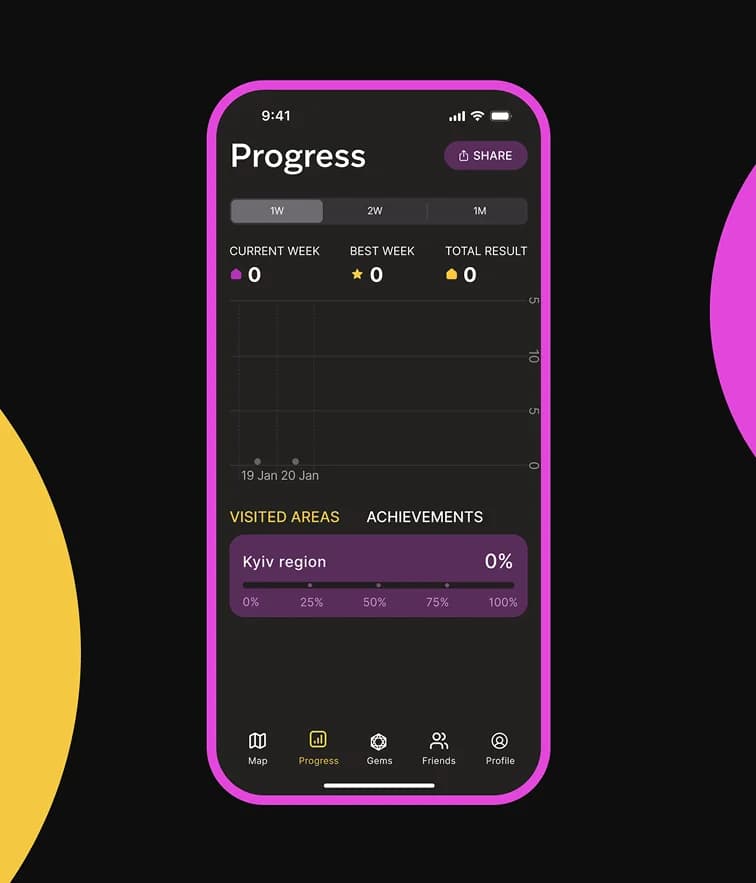
React Native apps, built to scale
One TypeScript codebase, real native UI, and over-the-air updates — with the React ecosystem and hiring pool behind you.
Why React Native
React Native renders real native views from one JavaScript codebase — pairing native look-and-feel with the largest talent pool and package ecosystem in mobile.
One codebase, real native UI
iOS and Android ship from a single React codebase that renders genuine native components — so the app feels native because, on screen, it is.
The React & JavaScript ecosystem
Millions of React and JavaScript engineers, and the entire npm registry, are available to your project — the deepest hiring pool and library catalog of any mobile framework.
Shared logic with your web app
Business logic, types, and state can be shared with a React web front end — one mental model, and one team, across mobile and web development.
Over-the-air updates
With over-the-air updates through Expo’s EAS Update you can ship JavaScript fixes straight to users’ devices, skipping the App Store review queue for non-native changes.
Faster iteration with Fast Refresh
Fast Refresh reflects code edits on the device almost instantly, and the new architecture (Fabric, TurboModules, Hermes) keeps startup and UI responsive.
Proven at the largest scale
React Native runs in Instagram, Discord, Shopify, and Microsoft products — a battle-tested foundation maintained by Meta and a vast open-source community.
What we deliver
React Native App Strategy
We map product goals, target platforms, and where one React Native codebase — and shared web logic — pays off, before development begins.
UX/UI Design
Native-feeling interfaces built on platform conventions, with a component library that keeps iOS and Android consistent and on-brand.
Cross-Platform Development
One well-architected TypeScript codebase on React Native’s new architecture — Expo where it accelerates delivery, native modules where you need them.
Testing & App Launch
Jest, React Native Testing Library, and real-device QA, then App Store and Google Play release with over-the-air updates and ongoing support.
Process
- 01
Discover
We learn your business, users, and goals to decide where React Native fits and to define a clear vision and roadmap.
- 02
Design
Wireframes, interactive prototypes, and a React component system validate flows before engineering begins.
- 03
Deliver
Engineer, test, and release a single React Native codebase tuned for native feel and store-ready production.
The React Native ecosystem
The tools we build on — each links to its official home.
Common questions about React Native development
It renders real native views from one TypeScript codebase, and it sits in the React ecosystem — the largest package catalog and hiring pool in mobile, which matters when you need to grow the team.
Business logic, types, and state can be shared with a React web front end. The UI layer stays native to each platform; the thinking underneath is written once.
Changes to the JavaScript layer can be delivered straight to installed apps without waiting on a store review. Native changes still go through the stores.
It runs in Instagram, Discord, Shopify, and Microsoft products, and is maintained by Meta alongside a large open-source community.
Yes. Where a feature needs Swift or Kotlin, we write a native module for it — the cross-platform codebase does not have to be all-or-nothing.
Explore other services
Book a call with our CEO

Denys Havryliak
Founder & CEO
- 10+ years in Software Engineering
- Master’s in Cybersecurity
- Deep, current knowledge of AI tooling
You’ll talk to the person who builds. Denys works hands-on across product, architecture, and delivery — and keeps a close watch on what today’s AI tooling can genuinely do in production, not just in a demo.